


How Delta Airlines Must Evolve

Delta Air Lines is facing mounting competitive and operational pressure (service cutbacks, tech shortcomings, shifting competitive landscape) and needs to respond strategically.
A major challenge is the inconsistency in its widebody “hard product” (older aircraft with dated premium cabins are still common in key hubs, creating uneven passenger experiences.)
Delta is addressing this through fleet modernization and retrofits (e.g., older A330s) and large new aircraft orders (787-10s, A350-1000s, plus additional A350-900s and A330-900s).
Smart aircraft deployment and upgraded customer experience (connectivity/Wi‑Fi, onboard amenities, lounges, smoother airport/baggage processes) must keep pace with the new planes to stay competitive.
Recently, Delta has been under a lot of pressure. Between eliminating free snacks and beverages on flights of less than 350 miles as well as flight cancellations due to outdated pilot scheduling software, the Atlanta-based carrier finds itself under flak. And with United Airlines threatening to acquire other carriers, Spirit going under and Alaska challenging their international network in Seattle, the timing is not ideal. But here are some of the challenges on the horizon that Delta will have to address in order to keep up.
Inconsistency With Hard Product

Outside of the new A330-900s and A350-900s, Delta’s widebody fleet consists of aging aircraft such as the Boeing 767-300ER/400ER and A330-200/300s. These planes aren’t getting any younger and some of these older planes are deployed at airports such as New York JFK, Atlanta, Salt Lake City, Detroit and Minneapolis. Their west coast hubs at Seattle and Los Angeles however, have their newer planes such as the A330-900s and A350-900s.

Compare this to United Airlines who have Dreamliners, 767s and 777s with updated interiors all over their hub networks thus making their fleet feel fresh to the passenger. Delta on the other hand has different interiors on all their widebodies with only the newer planes having the latest products. So, if a passenger is going to book Delta One, if they are on a 767-300ER, they will have to get a more open seat as opposed to a suite with a closing door on newer aircraft. This would not go well for the lucrative clientele in cities such as New York where most of the widebodies based there are aging. However the carrier recently announced that their older A330s will be retrofitted with their latest Delta One suites finally providing more consistency with passengers.
New Aircraft Orders
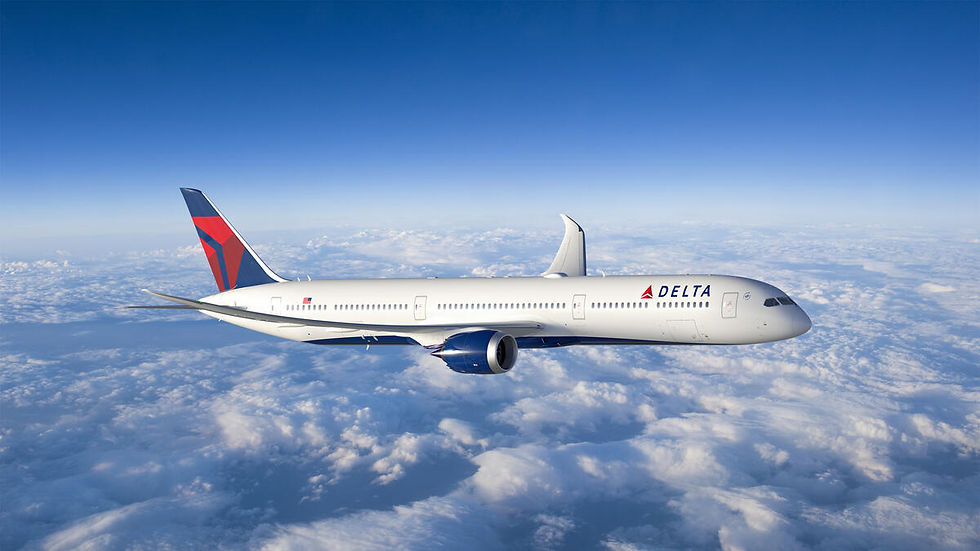
In addition to older aircraft needing refurbishment, Delta ordered new aircraft to replace older planes. Earlier this year, Delta entered their first Boeing widebody order by procuring 30 Boeing 787-10 Dreamliners with options for 30 more. This is an essential move for Delta because with the number of 767s they still have in the fleet, it would be easier for 767 pilots to transition to the 787 as opposed to the A330 and A350. Plus it would allow Delta to have newer aircraft all over the rest of the system thus providing more consistency.

In addition, two years ago, the airline became the first US carrier to order the Airbus A350-1000 set to arrive in 2027, which is the largest variant of the A350 family. With American and United having an advantage of having the 777-300ER that are utilized for higher density routes, Delta didn’t have that kind of plane since the retirement of their 747-400s in 2017. By ordering the A350-1000, Delta now can compete with the other two legacy carriers with these larger planes. Combine that with an additional order for 15 A350-900s and 16 A330-900s, Delta will have a more consistent international fleet that can compete with United and American. So the big question is where these planes will be deployed.
Aircraft Deployment

With all these new aircraft ordered, where they fly is just as important. Beginning with the 787-10s, Delta is planning to have them deployed on transatlantic routes and flights to South America. City pairs such as Atlanta-London, New York-Rome or Atlanta-Sao Pao are good candidates for where Delta can operate the type. Usually on some of these routes, Delta would deploy their 767s. By utilizing the 787-10 however, not only will the plane be newer, but it will carry more passengers on these routes. This will be essential for the summer travel season when passengers from New York would want to go on a holiday to Milan or Athens and having a newer plane such as the 787-10 would be beneficial for passenger comfort.

As for the A350-1000s, they will be deployed on high demand routes such as New York-London, Los Angeles-Sydney or Atlanta-London. In addition, Delta announced flights from Atlanta to Riyadh Saudi Arabia starting in October 2026 pending relief of geopolitical tensions. Combine that with flights from Los Angeles to Hong Kong and slowly but surely Delta is building their global network. But what good are all these new aircraft if the customer experience doesn’t match the new equipment?
Customer Experience

Even though Delta is the number one US airline when it comes to customer service, there is room for them to expand on their award-winning service in order to stay competitive. First off is online Wi-Fi. With other airlines utilizing Starlink for fast wireless connectivity for fliers, Delta decided to go with Amazon Leo for inflight Wi-Fi starting in 2028. Between Leo and their existing work with Amazon with AI, AWS and other services, Delta is investing heavily on making the customer experience more personal and premium.

In addition, their new Delta One products on the upcoming A350-1000s and A330 retrofits will now include a snack bar featuring small snacks an a small fridge with chilled non-alcoholic beverages. Lastly, the new planes will have a new IFE system with a bigger 4K resolution screen with Bluetooth connectivity.

At the airport, Delta will adding more Delta One lounges in their network for their international Delta One travelers providing a world-class experience for business class travelers. Lastly, Delta invested in smoother connections/check-ins by adding Touchless IDs for TSA PreCheck, a partnership with Uber for preferred drop-offs for passengers, and Seamless Bag Transfers. The latter is especially important because if a passenger is flying from Seoul Incheon to San Diego with a connection through Seattle, they can head straight to their boarding gate after clearing customs without reclaiming or rechecking bags.

This is important because that way passengers are less likely to miss their connections. As for the partnership with Uber, it allows passengers to be dropped off at an area in the drop-offs that would be the closest to the Delta check-in thus assuaging the bottlenecks that come with drop-offs at airports. All of these investments are ways that Delta is doubling down on the experience.
Conclusion

In conclusion, the emergence of Alaska Airlines and United Airlines are reminders that the industry is evolving and Delta’s advantage of having the best customer service of any US carrier is being challenged. Especially in a time when geopolitical uncertainty can destroy an airline, it’s now more important than ever for Delta to stay ahead of their competitors if they want to survive. But what do you guys think? What else does Delta need to do enhance their offerings? Let me know in the comments below and keep looking to the sky!


Comments